

What is Assessment?
Assessment at St Nicholas CE First School serves a clear purpose in providing information about a child’s performance over time and at a point in time. This information is used to inform subsequent curriculum design, and teaching and learning, and firmly underpins our principles and practices around providing timely, focused and constructive feedback (see Feedback Policy).
You can find more information here about our approach to feedback; we have kept both assessment and feedback as separate areas of our pedagogy, so that we can distinguish their key roles in teaching and learning, whilst also acknowledging that they are interconnected.
Evidence-Informed Practice
The Independent Commission on Assessment in Primary Education (2022) identify in their commissioned report the following principles for effective implementation of assessment:
• The main purpose of assessment is to improve children’s learning and progress during their school years.
• Formative assessment of children’s learning is the main emphasis of the assessment system.
• Assessment of children is clearly separated from the means to hold schools and teachers to account.
• Assessment of children provides a holistic picture of children’ achievements that reflects the whole curriculum, encompassing a wide range of understanding including creative thinking and collaboration.
• Assessment is designed to support inclusive education for all children.
At St Nicholas CE First School, we design, implement and evaluate the following types of assessment:
• School-Based Formative Assessment
• School-Based Summative Assessment
• National-Based Summative Assessment
In our Assessment Policy below we outline who, what and how we assess at St Nicholas, including the underpinning effective principles and practices that drive our assessment design, implementation and evaluation.
Our Assessment Policy
(Principles and Practices)
The intent of assessment at St Nicholas is to:
- Find out what children already know so they can build on this
- Unpick misconceptions, gaps and errors
- Provide effective feedback to move learning forwards
- Check learning within (as well as at the end of) lessons
- Inform curriculum renewal and debate (to enact changes that would positively influence the impact of the curriculum)
- Shape curriculum pedagogy (subsequent teaching and learning such as the sequencing, approach, assessment content and design)

Check In
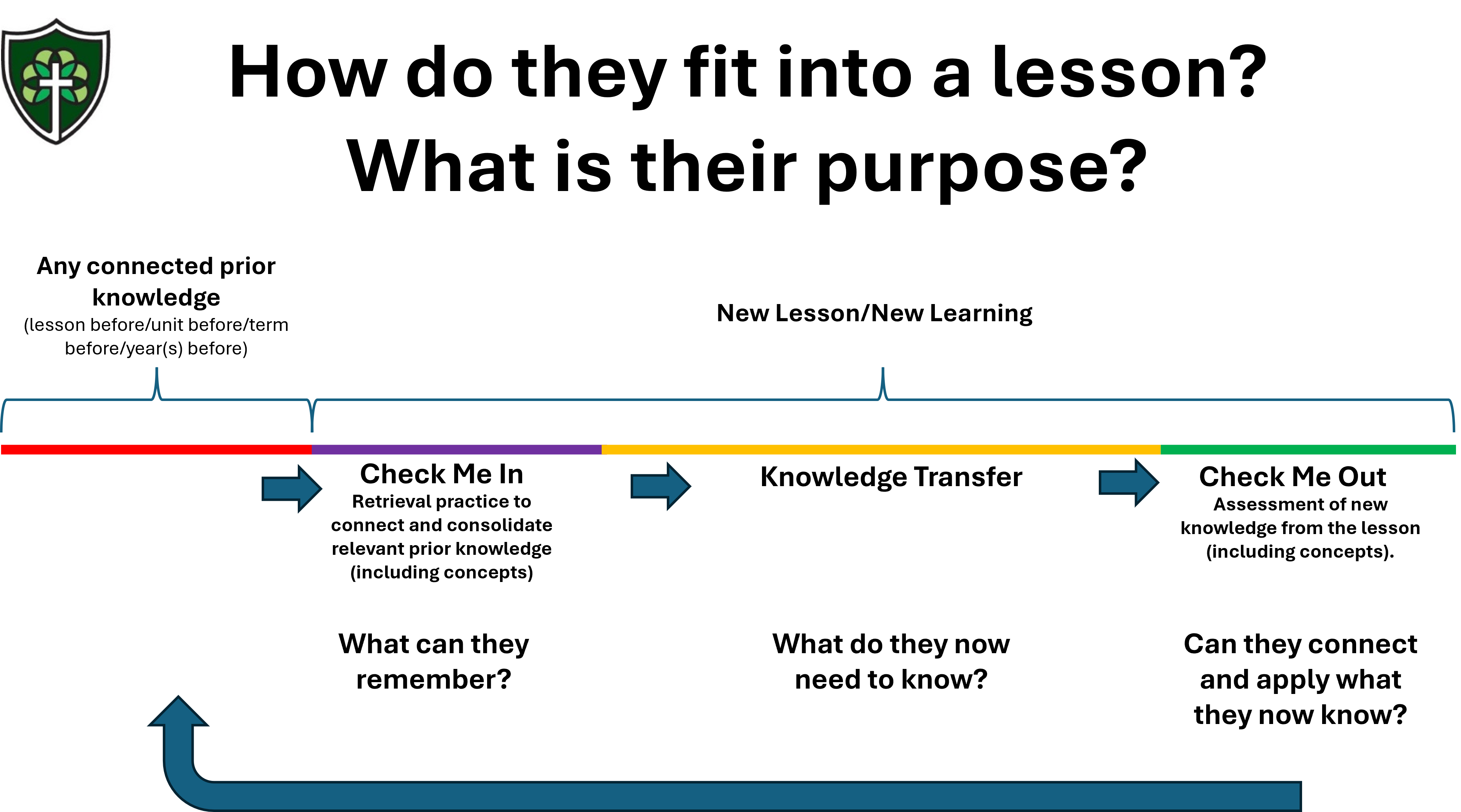
At the start of lessons, staff will use ‘Check In’ (a short, meaningful activity) to:
- Provide an opportunity to identify and address misconceptions or errors in connected prior learning.
- Create an explicit and purposeful way to draw upon how prior learning will feed into new learning.
- Activate prior learning to make new learning easier to manage (reducing cognitive load), once children can recall what they already know and then use to learn and understand new learning.
The Intended Impact of ‘Check In’ is:
- Children know more and remember more over time (through a variety of strategies).
- Children recognise explicit connections between what is already know and how it will help with new learning (reinforcing our ‘Why here? Why now?’ – They see how what they learn feeds into subsequent learning opportunities.
- Reduces cognitive load – children release the load to help learn and understand new
knowledge
Examples of Check In
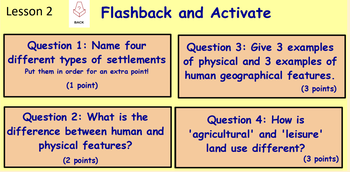
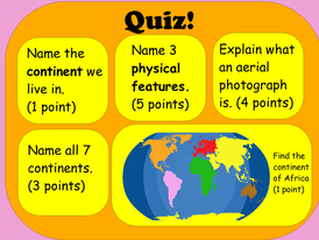
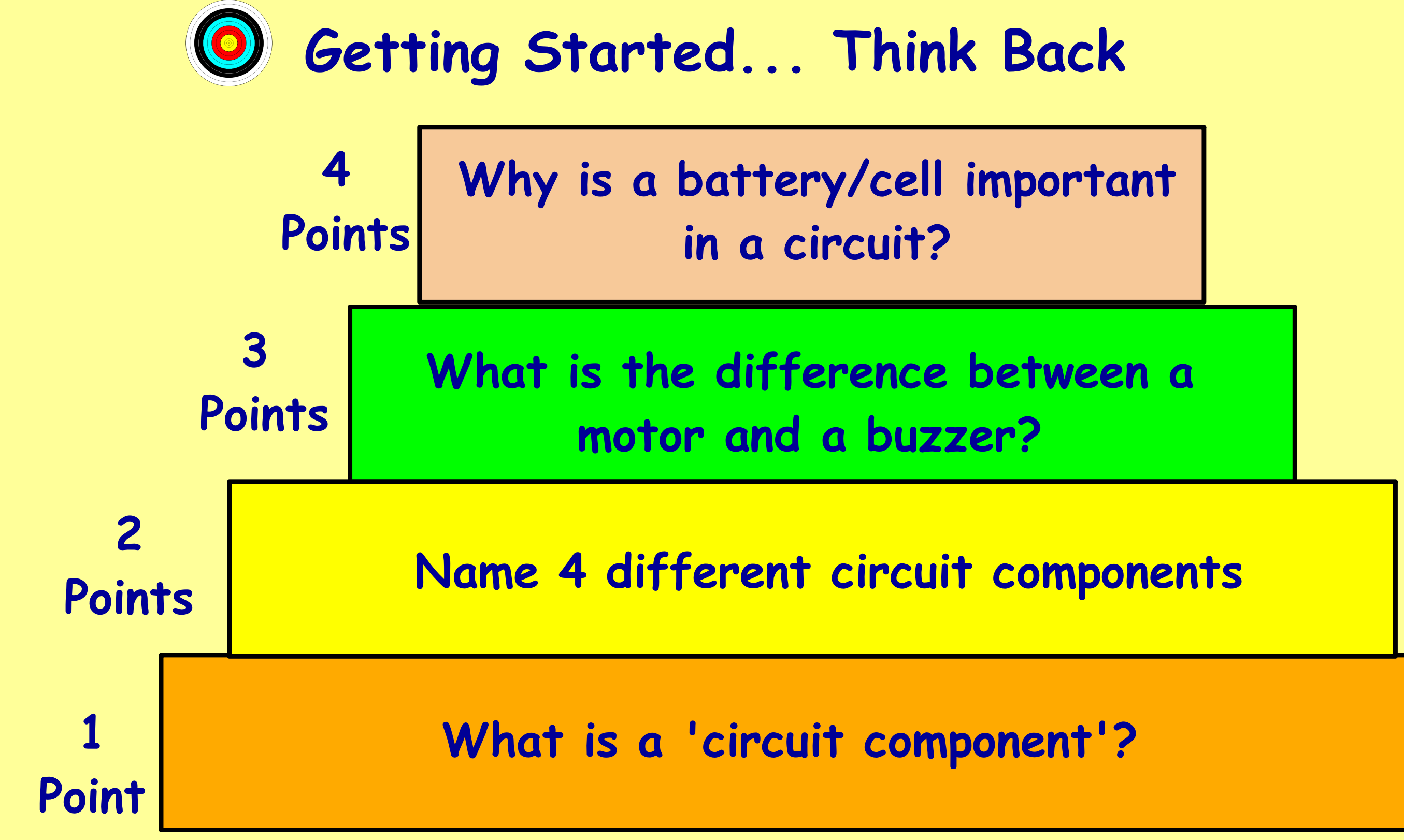
These are used in lessons across the curriculum to activate previously taught knowledge that is related to what children are learning. These are not seen as assessment opportunities, but are here for the purpose of seeing how retrieval practice strategies inform teaching and learning (i.e. to address misconceptions, errors and gaps in knowledge).
Check Out
At the end of lessons, staff will use ‘Check Out’ (a short, meaningful activity) to:
- Connect a concept/concepts and knowledge over time
- Create an assessment opportunity to check that children can apply knowledge they have learnt (i.e. using deeper thinking skills/ applying to another context).
- Keep concepts explicit and clear (i.e. interlinking knowledge and concepts/drawingconnections about how concepts have progressed)
- Builds on the principles of retrieval practice, as it requires children to retrieve and recall that they have learnt so that they can apply it, but this is more focused around assessing children’s knowledge.
The Intended Impact of ‘Check Out’ is:
- Clear opportunities for explicit references to concepts we have set out across our curriculum.
- Children are using their new knowledge purposefully by seeing how it fits into wider knowledge of what they already know.
- A very open approach so that there is no ‘ceiling’ on how deep children can go with it
Knowledge Checks
Good to Know
Our Knowledge Checks are not ‘tests’; their purpose is to give children and teachers the opportunity to recognise the impact of teaching, thinking, and learning from a top-level view.
It is important that our children are able to connect what they now know and recall what they have learnt. This also support their metacognitive and self-regulatory thinking and learning.
FACT!
Our Knowledge Checks are not used to generate scores or teacher judgements (there are no age-related expectations for foundation subjects). They are used to evaluate the impact of the curriculum design and implementation, which in turn informs subsequent curriculum renewal and debate.
As stated within our assessment policy, these assessments are designed to assess different types of knowledge that children have acquired and
applied over a period of time. They have been designed by our subject leaders and teachers to give our children the opportunity to showcase and share the most essential knowledge we have identified. They are to check knowledge from a top-level view, so that children can not only recognise connections from a unit of learning, but this also informs metacognitive and self-regulatory thinking and learning.
We recognise that each subject is a discipline in its own right and as such we have adapted the way in which assessment is implemented to ensure we create the right climate for children to participate in an assessment that is both meaningful, sharply-focused, and purposeful.